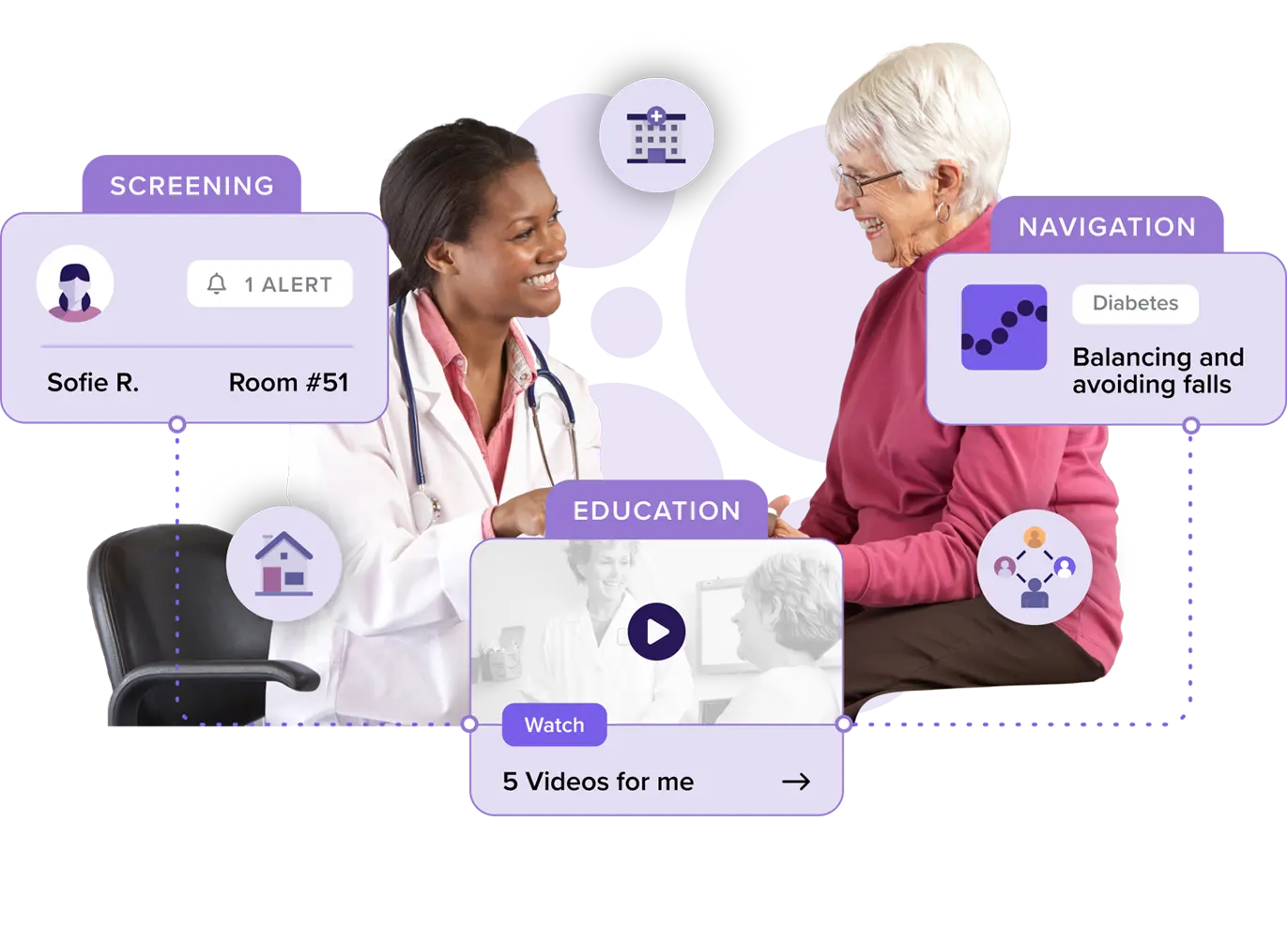
Market leading Get Well patient engagement solutions will focus on helping drive higher HCAHPS scores, improve operations, and reduce adverse events system-wide.
PALO ALTO, CA — JANUARY 29, 2026 — GW RhythmX, the industry’s leading AI-native company revolutionizing care delivery, patient engagement and health system financial performance announced today that UCI Health has implemented the Get Well comprehensive patient engagement solution at its newest state-of-the-art hospital campus in Irvine, CA.
The new hospital is a 350,000-square-foot, 144-bed facility that completes the $1.3 billion medical campus. UCI Health selected Get Well Stay to help deliver an unmatched experience for all patients by unifying bedside technology to deliver personalized education, entertainment, and real-time communication that helps improve outcomes while reducing staff workload.
Through the collaboration, UCI Health introduces Smart Room technology, personalized procedural care plans, and tailored post-discharge navigation tools across key UCI Health facilities. These innovations are designed to empower patients with real-time information about their stay, improve care team efficiency, and deliver a seamless experience from admission through recovery.
For health systems nationwide, this type of integrated inpatient and post-acute engagement strategy has become a critical lever for improving outcomes while protecting financial performance. In comparable deployments, organizations using Get Well Stay have seen meaningful reductions in clinical and safety-related events, including 22% fewer 30-day readmissions, 63% fewer hospital-acquired infections, and millions of dollars in avoided penalties associated with falls prevention.
As part of this rollout and patient engagement strategy, UCI Health will also implement Get Well Loop that delivers step-by-step guidance through care episodes to ensure better adherence,
safer transitions, and lower readmissions. Similarly, other health systems implementing Get Well Loop have realized significant operational and clinical gains, including 50% fewer inbound care-related calls, 37% fewer procedure cancellations and no-shows, and a 67% relative reduction in 90-day post-discharge readmissions. These results highlight how digital engagement can simultaneously improve the patient experience, care coordination, and health system efficiency.
“UCI Health is setting a clear example for how forward-thinking health systems use digital innovation to revolutionize care and deliver measurable ROI,” said Deepthi Bathina, CEO of GW RhythmX. “As they continue to raise the bar for patient-centered care, we’re proud to be a partner in their vision with the technology and precision care needed to power the next generation of AI-driven digital health experiences.”
The implementation at UCI Health is part of Get Well’s broader initiative to support leading health systems nationwide with scalable, AI-ready and AI-fueled engagement solutions. By integrating these solutions, UCI Health aims to improve patient activation, loyalty, and outcomes while achieving accelerated returns on the investments they make in their communities, patients and their families.
About GW RhythmX and Get Well
Get Well and RhythmX AI have merged to form GW RhythmX, defining a new category of AI-powered precision care and patient engagement. The company combines market-leading AI precision care technology with extensive trusted patient engagement leadership to help health systems deliver the right care, at the right time, through the right clinician and channel. Its solutions are deployed across more than 150 health systems, touching more than 85M patients including 8M U.S. military veterans. The company’s award-winning solutions were recognized again in 2024 by KLAS Research, Fierce Healthcare, and AVIA Marketplace. A SymphonyAI Group company, GW RhythmX leverages various firm assets, including $1B+ in R&D investment, longitudinal data related to 300 million patients, 4.4 billion total annual claims, and 1.8 million healthcare professionals at more than 3,000 facilities globally.