Tomica Staley, Client Success Manager
A successful hospital stay doesn’t end when a patient leaves the building. It ends when they are home, confident, and equipped to manage their health independently. The final step in this journey—the discharge process—is critical. For Veterans, clear instructions and a solid understanding of their medications can make all the difference in their recovery. Recognizing this, a Southeastern VAMC launched a strategic initiative in FY25 to transform its discharge and medication education for inpatients.
The health system faced a common but significant challenge: ensuring every Veteran received consistent, high-quality information before heading home. With growing feedback from Veterans asking for clearer explanations and a nursing staff stretched for time, leadership knew a change was needed. By implementing a standardized digital education solution, this VAMC not only addressed these issues but also created a more supportive and empowering experience for the Veterans they serve.
The Challenge: Inconsistency and Time Constraints
This VA Medical Center is a major tertiary care teaching hospital that serves over 85,000 Veterans. Its nursing teams are dedicated to providing exceptional care, but the demands of a busy inpatient environment created significant hurdles for discharge education.
Limited Time for Teaching
Nurses often found themselves juggling multiple urgent patient needs, leaving little protected time for in-depth discharge conversations. This time pressure could lead to rushed explanations, making it difficult for Veterans to absorb complex information about their care plan, follow-up appointments, and new medications.
Inconsistent Workflows
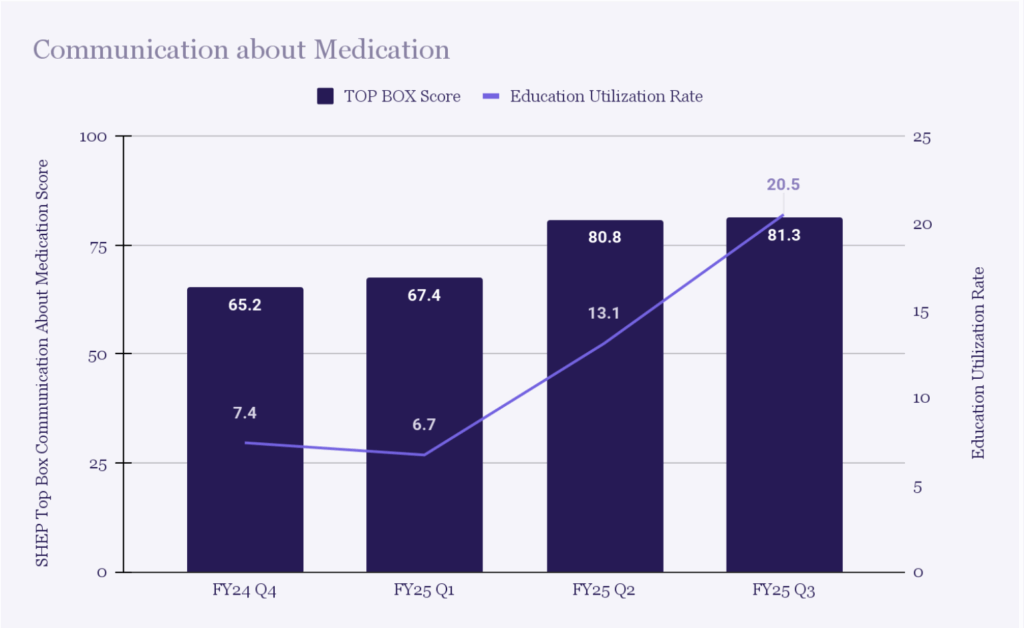
Without a standardized process, the quality and content of discharge education could vary from one unit to another, or even from one nurse to another. This inconsistency meant that some Veterans might receive detailed instructions while others were left with unanswered questions. This gap was reflected in Survey of Healthcare Experience of Patients (SHEP) feedback, where Veterans frequently expressed a need for better, clearer information about their medications and what to expect after leaving the hospital.
Lack of Visibility for Leadership
For hospital leadership, overseeing the effectiveness of patient education was difficult. There was no easy way to track whether education had been completed or how well Veterans understood the material. This lack of reliable data made it challenging to identify areas for improvement and measure progress toward key FY25 strategic priorities centered on patient experience and safety.
The Solution: A Unified Digital Approach
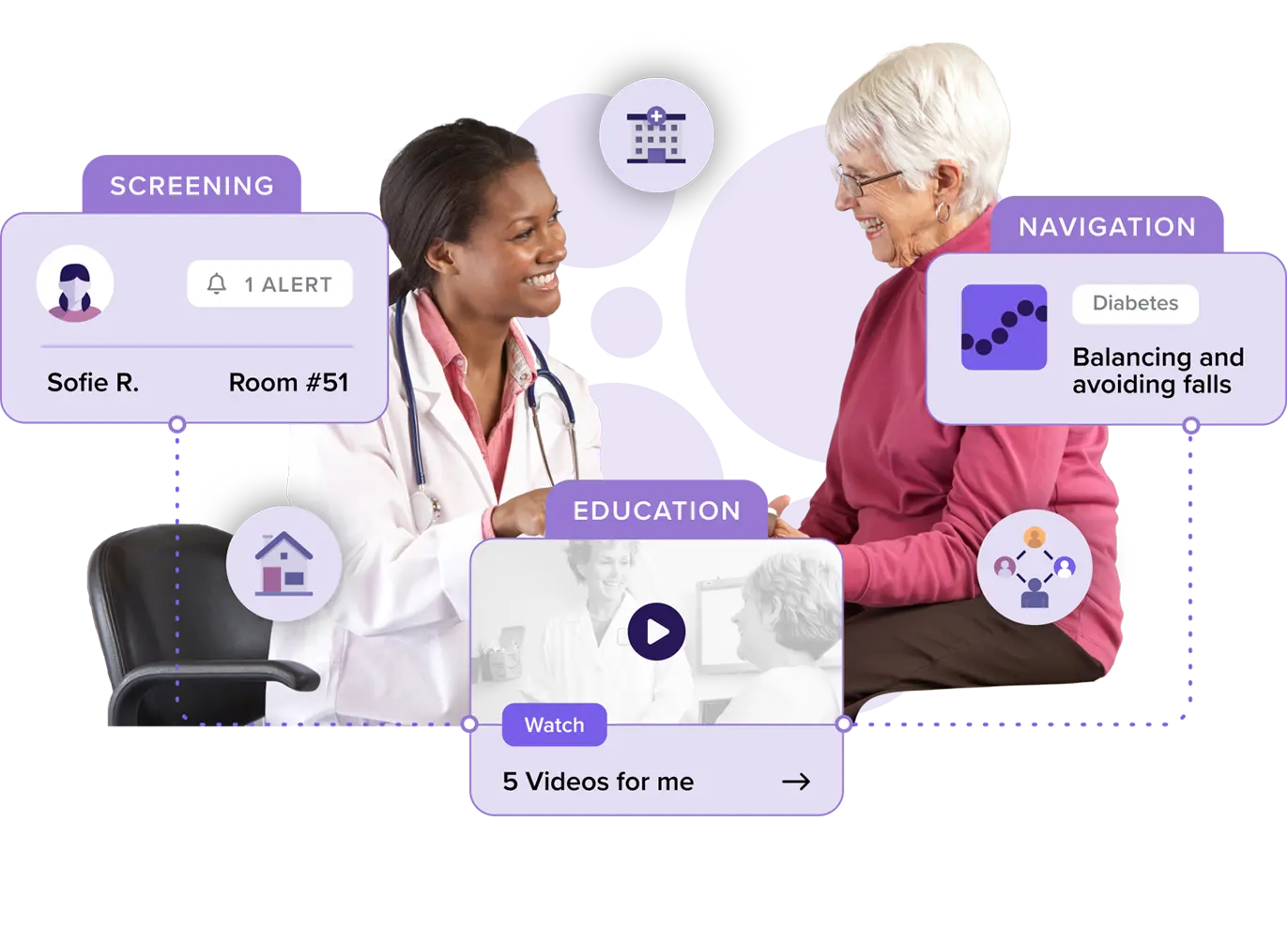
To address these challenges head-on, this VAMC partnered with Get Well to implement a standardized digital education platform. The core of this solution involved two key components: the Medication Teaching Pathway and the Discharge Readiness Pathway.
This new system automated the delivery of educational content to every Veteran upon admission. Instead of relying solely on verbal instructions delivered at a potentially stressful time, Veterans could now access clear, easy-to-understand digital resources at their own pace, right from their bedside.
How It Works
- Automated Assignment: As soon as a Veteran was admitted, the system automatically assigned the relevant educational pathways. This ensured that no patient was missed and that education began early in the hospital stay, not just in the final hours.
- Accessible Content: The digital format presented information in a digestible way, covering everything from medication names and dosages to potential side effects and the overall discharge plan. Veterans could review the materials multiple times, and family members could also participate in the learning process.
- Real-Time Dashboards: The platform provided staff and leadership with real-time visibility into patient progress. User-friendly dashboards showed which Veterans had completed their education and which might need additional support. This data-driven approach allowed nurses to focus their attention where it was needed most.
- Streamlined Documentation: The system integrated with staff workflows, significantly reducing the manual documentation burden. Education completion was tracked automatically, freeing up valuable nursing time that could be reinvested in direct patient care.
The Impact: Consistency, Clarity, and Confidence
The implementation of Get Well’s digital pathways brought about immediate and measurable benefits for Veterans, staff, and the entire healthcare system including the following:
- 84% Discharge Readiness Pathway Completion
- 77% Medication Sheets viewed and acknowledged
- 22,571 health and safety videos assigned
- 3,777 nursing hours saved through standardized digital education (avg. 5 minutes per video)
Enhanced Veteran Understanding and Empowerment
The most significant impact was on the Veterans themselves. With access to standardized, on-demand information, they felt more prepared and confident about managing their health after discharge. The ability to review materials multiple times helped reinforce learning and reduce anxiety about their care plan. This new clarity directly addressed the feedback received through SHEP surveys, empowering Veterans to become more active participants in their own health journey.
Increased Efficiency for Nursing Staff
By automating the delivery and documentation of education, the initiative eased the strain on nursing staff. Nurses could now use their time more strategically, focusing on reinforcing key concepts, answering specific questions, and providing the human touch that technology cannot replace. The consistent workflow across all inpatient units created a more predictable and less stressful environment for the clinical teams.
Improved Healthcare Outcomes
A well-informed patient is a safer patient. By ensuring that every Veteran leaves the hospital with a clear understanding of their medications and follow-up care, this VAMC is taking a proactive step toward reducing medication errors and preventable hospital readmissions. This focus on education is a cornerstone of high-quality care that leads to better long-term health outcomes.
Conclusion: A Commitment to a Better Veteran Experience
The strategic initiative at this VAMC demonstrates a deep commitment to serving those who have served. By leveraging technology to solve a persistent healthcare challenge, they have created a more effective, efficient, and Veteran-centric discharge process. This unified approach not only supports the dedicated nursing staff but, most importantly, ensures that every Veteran returns home with the knowledge and confidence they need to heal and thrive. This initiative stands as a powerful example of how thoughtful innovation can profoundly improve the entire continuum of care.