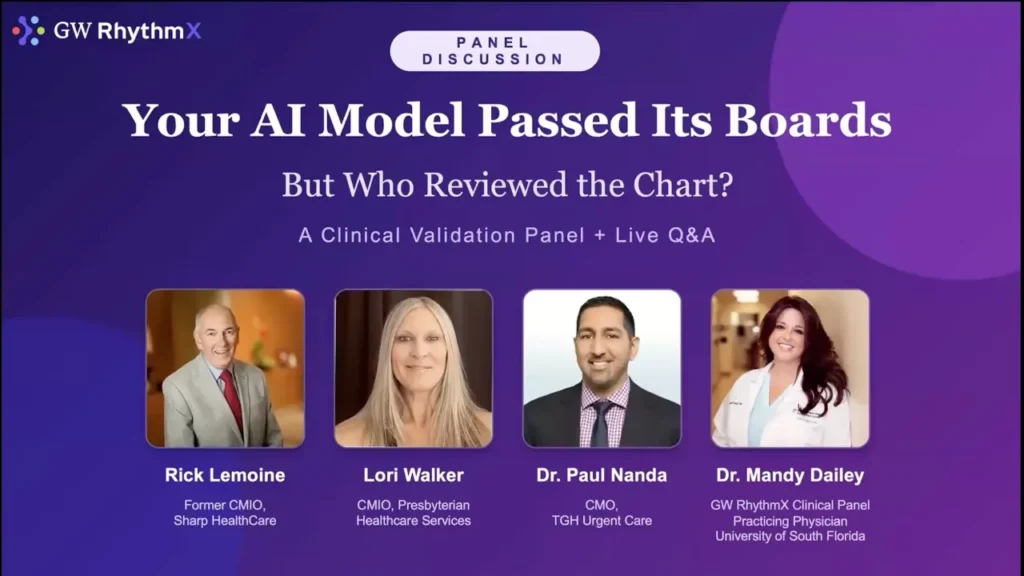
On-Demand Webinar: Your AI Model Passed Its Boards. But Who Reviewed the Chart?
Discover how Presbyterian Health Services uses RhythmX AI to transform the EHR into clinical intelligence, anticipate patient risks, and guide real-time decisions.

Select a filter
On-Demand Webinar: Your AI Model Passed Its Boards. But Who Reviewed the Chart?
Discover how Presbyterian Health Services uses RhythmX AI to transform the EHR into clinical intelligence, anticipate patient risks, and guide real-time decisions.
VA VISN 08 Expands Usage of Get Well Anywhere-Federal Platform Across 2,600+ Beds
PALO ALTO, Calif., February 23, 2026 – GW RhythmX, the industry’s leading AI-native company revolutionizing care delivery, and patient engagement and improving financial performance for health organizations, today announced the successful renewal and expansion of its partnership with Veterans Integrated Service Network (VISN) 08, further extending deployment of the Get Well Anywhere–Federal Platform across eight
Discover how Presbyterian Health Services uses RhythmX AI to transform the EHR into clinical intelligence, anticipate patient risks, and guide real-time decisions.
UCI Health has implemented GW RhythmX’s comprehensive patient engagement solution, including GetWell Stay and GetWell Loop, at its newest state-of-the-art hospital campus to drive higher HCAHPS scores, improve operations, and reduce adverse events through Smart Room technology and personalized procedural care plans.
UCI Health Opens World-Class Facility Using GW RhythmX Inpatient Smart Room Technology
UCI Health has implemented GW RhythmX’s comprehensive patient engagement solution, including GetWell Stay and GetWell Loop, at its newest state-of-the-art hospital campus to drive higher HCAHPS scores, improve operations, and reduce adverse events through Smart Room technology and personalized procedural care plans.
HITRUST Risk-based, 2 year (r2) Certification and SOC 2 Type II Attestation validate GW RhythmX’s commitment to strong cybersecurity and meeting key regulations to protect sensitive data across enterprise-scale healthcare environments. (Palo Alto, Calif., January 27, 2026) – Get Well, a part of GW RhythmX which is the industry’s leading AI-native company revolutionizing care delivery, and patient engagement and improving financial performance
Case Study: Southeast VA Medical Center improves Veteran discharge education, saving 3,700+ nursing hours
Blog Post: Southeastern VA Medical Center Boosts Veteran Discharge Education
Learn how a Southeastern VAMC used Get Well to streamline discharge and medication teaching for a better Veteran experience.

The combined company, backed by multi-billion dollar SymphonyAI Group, has 150 health system clients and will be led by RhythmX AI Founder and CEO, Deepthi Bathina; it will deliver the leading AI patient-centric precision care platform for industry-defining outcomes for patients, clinicians, nurses and health systems (PALO ALTO, CA – November 11, 2025) – Get
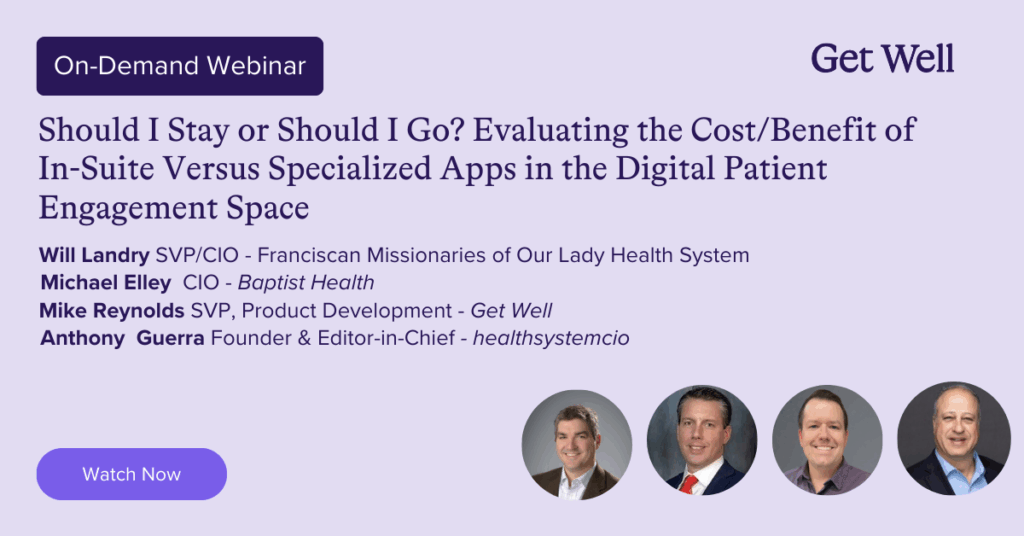
Hear from leaders who have grappled with the decisions of choosing a digital patient engagement solution that balances user preferences with overall enterprise IT initiatives.

Expert Insights: Addressing ACOG’s Prenatal Guidance with Digital Engagement
ACOG’s new prenatal care guidelines call for personalized, risk-based models that address maternal health disparities. Get Well’s Maternal Health Solution helps health systems adopt and act on these standards through its scalable digital tools, live navigators and SDOH screening and on-going support for birthing persons. The result? Better outcomes for mothers and babies.
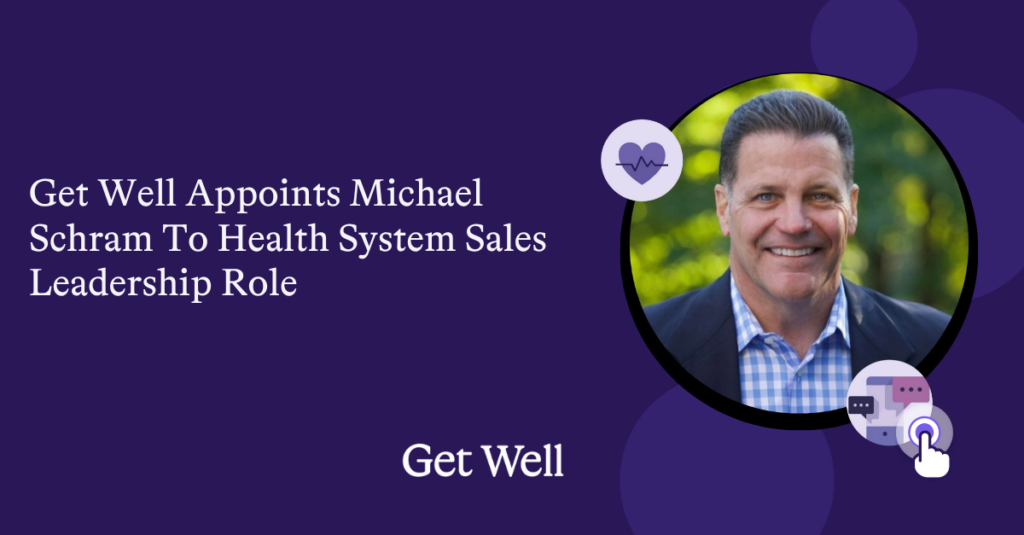
(BETHESDA, MD – June 23, 2025) – Get Well, the leader in digital patient engagement, is pleased to announce the appointment of Michael Schram as Vice President of Health System Sales, where he will oversee all aspects of revenue expansion in its core market, including strategic partnerships, market development, and solution growth across Get Well’s
Glimpse the New Horizon: Agentic AI’s Role in Patient Engagement
Hear what Get Well’s Senior Vice President of Data and AI, Oladimeji (Dimeji) Farri has to say about the rapidly evolving landscape of agentic AI patient engagement and what healthcare leaders should keep in mind as they determine how best to adopt and integrate this technology into their organizations.
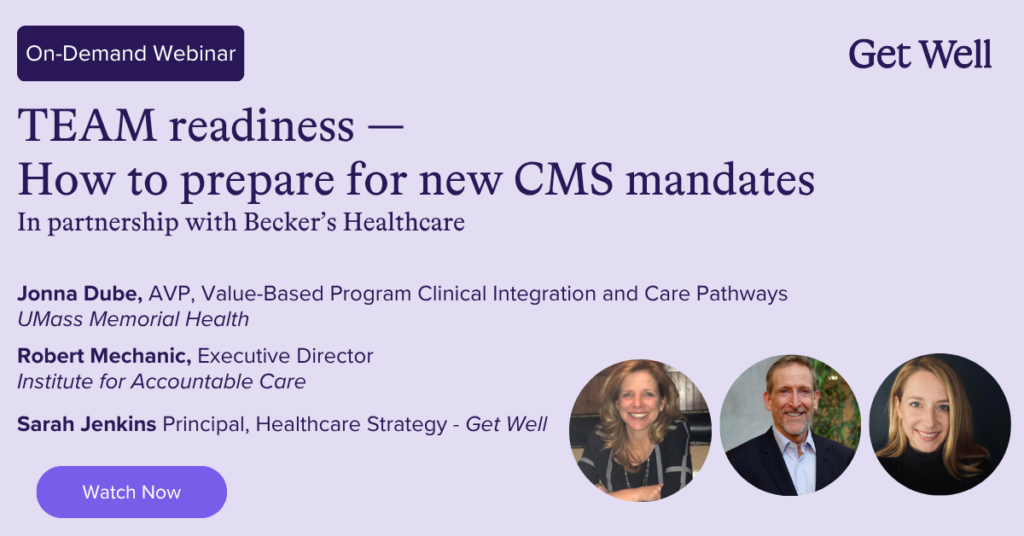
On-Demand Webinar: TEAM Readiness – How to Prepare for New CMS Mandates
TEAM Readiness. Hear from policy experts and a leading health system executive who’s already seeing results with scalable, digital patient engagement. Learn how your care teams can reduce avoidable utilization—and gain time for high-touch, high-value interventions.
At LifeBridge, Using Digital Programs to Drive Better Maternal Health Outcomes
Get Well and LifeBridge Health are partnering to tackle maternal health disparities with an innovative digital outreach program. By combining technology with personalized care, the initiative supports patients from pregnancy through postpartum—improving outcomes, reducing preterm births, and increasing patient satisfaction. Learn how this high-tech, high-touch solution is transforming maternal care in Baltimore and beyond.
Case Study: How Get Well Helps Leading Health Systems Improve Value-Based Care Performance
In partnership with Get Well, organizations of all sizes are using digital engagement to scale personalized care, support recovery beyond the hospital, and deliver measurable results across the continuum of care.
Case Study: Northern VA Medical Center Reduces HAIs Using Patient Engagement Solutions
Learn how a Northern VA Medical Center partnered with Get Well to address challenges in hand hygiene compliance among patients and care teams, reducing HAIs by 44%.
Learn how Get Well partnered with this VA Medical Center to reduce observed minus expected length of stay (OMELOS) by 26%.
Learn how Get Well helped National Capital Region VA Medical Center Achieves 24% Increase in Staff Responsiveness Satisfaction
Agentic AI and Patient Assistants: Shaping the Future of Hospital Engagement
Get Well’s precision digital engagement supports patients at every step in their care with critical attention to easing transitions from acute care to post-op recovery, wherever it is. On May 1, 2025, Get Well unveiled Opal, its on-demand AI patient assistant for hospital experience and post-discharge support.
How to Extend Engagement Post-Procedure to Support TEAM Goals
Get Well’s precision digital engagement supports patients at every step in their care with critical attention to easing transitions from acute care to post-op recovery, wherever it is. The best way to succeed under TEAM is by preparing patients for their procedure and recovery period with bite-sized personalized information and support.
Get Well Appoints Data and AI Industry Leaders to Power AI Roadmap
BETHESDA, Md., May 8, 2025 — Get Well, the leader in digital patient engagement, announced the appointment of Oladimeji (Dimeji) Farri to Senior Vice President of Data and AI, and Mitch Kearney to Senior Vice President of Product Development. Both leaders will accelerate Get Well’s precision care platform, recently announced at the Get Connected 2025 conference. “Dimeji and Mitch are leaders accelerating
Get Well unveils AI-powered Patient Assistant on new Precision Care Platform with SAIGroup
(BETHESDA, MD – May 1, 2025) – Get Well, the leader in digital patient engagement, unveiled Opal, an on-demand AI patient assistant for hospital experience and post-discharge support. The announcement was made at the Get Connected 2025 conference, where both Get Well and sister company RhythmX AI showcased AI-powered assistants built on the precision care
How to Maximize TEAM Performance? Engage on the Front End to Maximize Results Post-Episode
Using precision digital engagement to educate, support patients prior to care, sets the stage for optimal TEAM performance For a variety of reasons, people with Medicare undergoing surgery may not be well-prepared for their procedure or care for themselves properly post-surgery. When this happens, it can lead to complications, longer recovery times and other issues
Priority Health to better identify and address member needs with Get Well partnership
(GRAND RAPIDS, Mich. – April 2, 2025) – Priority Health, a nationally recognized nonprofit health plan serving more than 1.3 members, and Get Well, a global leader in digital consumer health engagement, will partner to connect Medicaid members to available resources. Priority Health will implement Get Well’s new screening service that captures member needs and
With the right precision patient engagement solution, patients are supported, plus providers can gain the whole-patient insights they need. With these insights into SDOH needs, mental health status and more, providers can understand the “why” behind patient behaviors, influence them and achieve better outcomes. In this eBook, find out how understanding the whole patient can
Elevating Veteran Care: Impactful Outcomes Through Patient Engagement
Get Well has partnered with the VHA to elevate Veteran care through innovative patient engagement technologies for over 10 years. Collaborating with 61 VHA healthcare facilities, Get Well has improved Veteran satisfaction, streamlined workflows, and achieved better clinical outcomes. Learn more about the impactful outcomes we achieved with our VA partners in 2024.
Get Well earns expansions, renewals and launches with 58 health systems in the fourth quarter of 2024 BETHESDA, Md., Feb. 19, 2025 /PRNewswire/ — Get Well, the leader in digital patient engagement, announced 58 leading health systems and hospitals renewed, expanded, and launched new collaborations in the fourth quarter of 2024. This includes seven health systems engaging in
In this eBook, find out how Get Well’s Youth Mental Health program is reducing costly ER visits, aligns with CMS updated guidelines and is showing measurable cost savings—in the short term—and improved mental health outcomes.
On-Demand Webinar: Strategies and Tools for Easing Nurses’ Cognitive Burden
Discover how to reduce the cognitive burden on nurses and foster a more efficient, supportive care environment with the right tech and strategies.
Visionary executive known for leading disruptive healthcare strategy and value through a tech-enabled, people-centric lens Bethesda, MD (February 4, 2024) — Get Well, the leader in digital patient engagement, announced Laura Semlies has joined Get Well’s executive leadership team as its first Chief Transformation Officer. She will oversee strategy, business development and new market initiatives, as well
4 Ways Hospitals can Boost Value-Based Purchasing Performance
In this eBook, explore how a focus on data, digital patient engagement, and population health can boost the performance of health systems and hospitals in Value-Based Purchasing (VBP) models. We share 4 tips to delivering value-based care that delivers both financial outcomes and better patient experiences.
Guided Care in Action: Improving Patient Outcomes at Virginia Mason Medical Center
Imagine fewer surgery cancellations, happier patients, and better health outcomes all around. That’s the reality at Virginia Mason, where innovation is at the heart of everything they do.
Get Well Appoints Katherine Virkstis to Chief Clinical Officer
Industry thought leader envisions deep clinical integration with Get Well’s innovation in digital patient engagement Bethesda, MD (December 19, 2024) — Get Well, the leader in digital patient engagement, announced Katherine Virkstis has been appointed Chief Clinical Officer. As Vice President of Clinical Advisory Services at Get Well, Virkstis has brought deep healthcare knowledge, strategic
Get Well Earns 2024 Fierce Healthcare Diversity, Equity, and Inclusion Award
Recognition highlights Get Well’s maternal health equity and youth mental health programs Bethesda, MD (December 9, 2024) — Get Well, the leader in digital patient engagement, announced it has earned the Fierce DEI Award for Outstanding DEI Initiatives in Patient Care for Get Well’s maternal health equity and youth mental health programs. “As one of
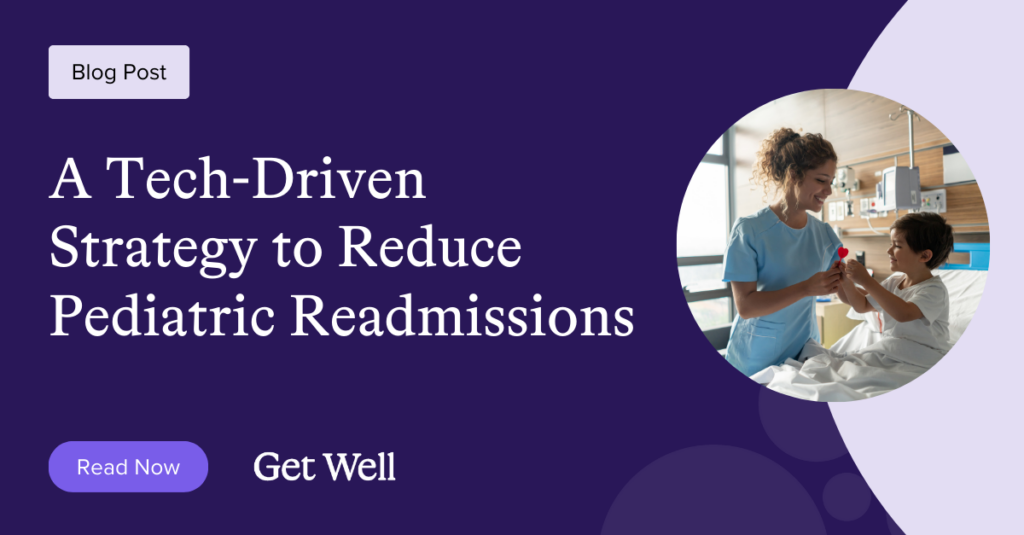
Preventable pediatric readmissions cost children’s hospitals and pediatric providers a staggering $1.5 billion annually. Find out how digital patient engagement can reduce readmissions by supporting families early on with education, reminders, follow-up, escalation to care when needed – and by addressing their SDOH needs
Get Well Launches Advisory Board For Development of Patient Intelligence™️
Advisory board to shape the next chapter of AI-powered patient engagement capabilities Bethesda, MD (November 20, 2024) — Get Well, the leader in digital patient engagement, announced the launch of their strategic advisory board spanning industry leaders across healthcare to guide the next stage of whole-person, personalized care. “We joined SAI Group earlier this year
Discover how a Southeastern VA Medical Center implemented innovative staff training to improve Veteran patient engagement.
Get Well renews and expands 38 collaborations in the third quarter of 2024, sees impressive results with transitions of care and point of care solutions through client use Bethesda, MD (November 13, 2024) — Get Well, the leader in digital patient engagement, announced continued and expanded collaborations with 38 leading health systems and hospitals in
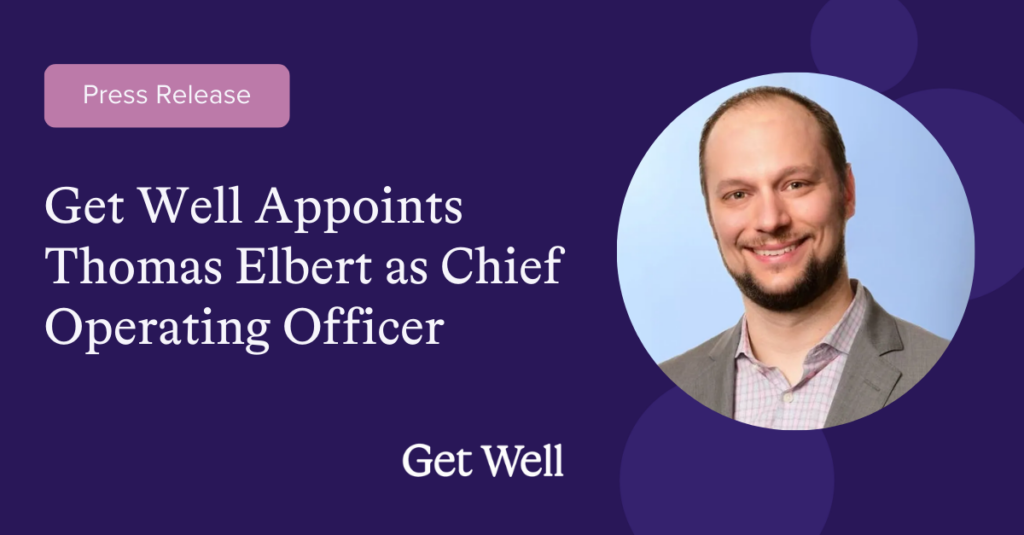
Executive brings more than 20 years of healthcare information technology, data architecture, and analytics experience Bethesda, MD (November 1, 2024) — Get Well, the leader in digital patient engagement, announced Thomas “TJ” Elbert has joined Get Well’s executive leadership team as Chief Operating Officer. He will oversee product development, data, AI, implementation and customer experience.
The recognition builds on mounting acknowledgement of Get Well’s leading patient engagement technology Bethesda, MD (October 23, 2024) — Get Well, the leader in digital patient engagement, announced recognition from AVIA Marketplace – the leading digital health marketplace – for conversational AI, patient education and remote monitoring. “This recognition AVIA Marketplace, informed by the number
Why CAHPS Scores Matter for MA Plans—and How Digital Engagement Can Improve Them
Medicare Advantage (MA) plans rely on CAHPS scores for Star Ratings and financial rewards. Get Well’s personalized digital engagement platform addresses chronic conditions, member support, and SDOH needs, improving member experiences and boosting CAHPS outcomes. Engage hard-to-reach members, build trust, and enhance health outcomes.
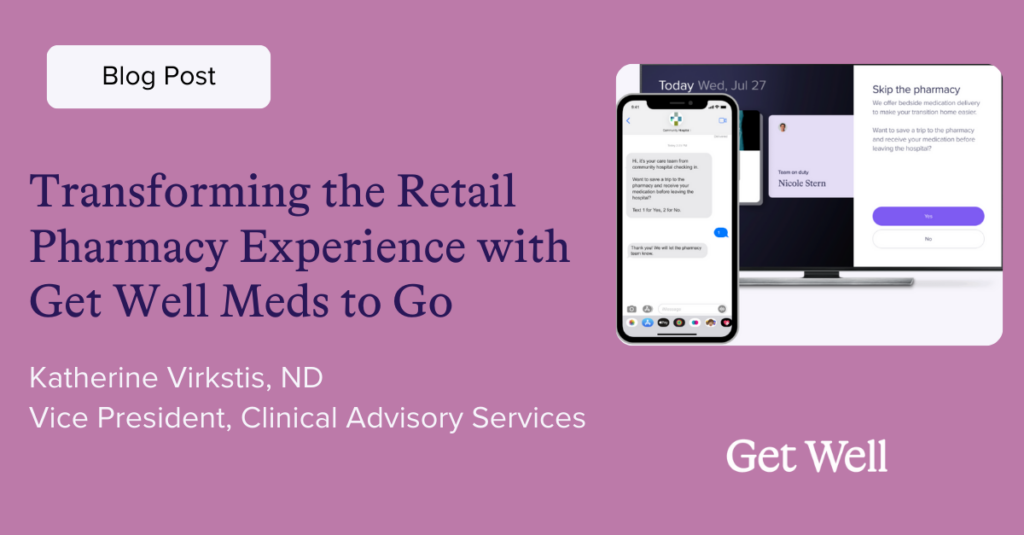
Transforming the Retail Pharmacy Experience with Get Well Meds to Go
Discover how a hospital in the Midwest leveraged Get Well’s Meds to Go program to engage patients and strengthen their in-house retail pharmacy system.
Enhancing Veteran Care Through Innovative Service Request Features
Discover how a Southeastern VA Medical Center utilized innovating digital features to enhance Veteran Care
Learn how to enhance Post-Discharge Ostomy Care for Adults using Get Well at a Southeastern VAMC, and explore capabilities available in the Get Well Anywhere – Federal (GWA-F) platform, enabled by Get Well’s FedRAMP ATO.
CMS is driving new mandates that will significantly impact how Medicare Advantage (MA) plans can receive Quality Bonus Payments (QBP). If plans only make superficial changes, it could spell disaster.
Get Well Recognized by KLAS Research for Addressing Social Determinants of Health
Get Well’s whole health digital screening and navigation programs utilized in partnerships to facilitate health equity and whole-person care Bethesda, MD (October 7, 2024) — Get Well, the leader in digital patient engagement, announced recognition by KLAS Research for their programs focused on social determinants of health (SDOH). Get Well will present the results of
How the VA Joined Forces with Get Well to Prevent Patient Falls, Saving Millions in Cost
In 2023, four Veterans Affairs (VA) Medical Centers on the West Coast led a focused initiative to enhance clinical outcomes, specifically addressing the issue of in-hospital falls.
Explore how patient engagement, predictive analytics, and digital care coordination are impacting trends in emergency department management.
Get Well’s cross-continuum digital patient engagement platform can now be accessed through AWS GovCloud and cloud services by federal organizations to personalize patient outreach across full episodes of care Bethesda, MD (September 24, 2024) — Get Well, the leader in digital patient engagement, announced its cross-continuum digital patient engagement platform has earned Federal Risk and
Modernizing Interactive Patient Care: The Evolving State of Smart Room Hardware Capabilities
Learn how Get Well’s integrated 360 platform helps hospitals modernize patient care and optimize smart room hardware for improved outcomes.
Learn how digital engagement plays a role in reducing ED costs and readmissions by addressing primary care access, behavioral health, and SDOH.
The Expanding Role of AI in Healthcare: 5 Innovative Use Cases
Leading health system innovators are using AI for tasks ranging from simple process automations to advanced clinical decision support models. These applications help reduce provider burden and expand the possibilities of patient care.
In this eBook, explore how SDOH data is already being used in healthcare settings. Explore how the future of SDOH data in healthcare holds great promise, but realizing this potential will require concerted efforts across multiple fronts.
Amplifying Veteran Patient Engagement with Effective Staff Training
Discover how a Southeastern VA Medical Center optimized clinical staff training to improve Veteran Patient Engagement with Get Well.

5 Ways to Reduce EHR Inbox Volume with AI, Automation, and Smart Workflows
Discover 5 ways to reduce EHR inbox volume using AI, automation, and smart workflows, enhancing efficiency and reducing burnout.
Discover how state Medicaid agencies can leverage the CMS Transforming Maternal Health (TMaH) Model to improve maternal health outcomes and close care gaps with up to $17 million in funding.
The Magic of Wheels Up!: Bringing Adventure and Joy to Hospitalized Pediatric Patients
Discover how Sunrise Association’s innovative Wheels Up! program, featured in Get Well’s solution for children’s hospitals, brings joy to pediatric patients worldwide.
To ensure you hit 2024 critical measure-level cut points, take proactive steps focusing on members who could use a nudge.
The Patient Portal is Broken: How Get Well Enables Seamless Communication for Success
It is time to take into consideration the user experience, knowledge, and digital literacy required to navigate a behemoth patient portal.
Enhancing Veteran Patient Satisfaction with Digital Rounding
Discover how a Northeastern VA Medical Center transformed their patient satisfaction reporting approach using Get Well’s digital rounding tool, to enhance the healthcare experience for both patients and clinicians. The implementation of virtual surveys with Rounds+ has allowed staff to proactively address patient needs, shifting focus from reactive problem-solving to delivering exceptional care.

Case Study: Reducing HAIs in Two Southeast VA Medical Centers
About the Southeast VA Medical Centers Get Well Solution: According to the Centers for Disease Control and Prevention, millions of people acquire an infection while receiving care, treatment, and services in a healthcare organization each year. Two Veterans Affairs Medical Centers in a Southeastern VISN partnered with Get Well last August to identify a path
Learn how to build trust with high-risk members, leverage cost-effective engagement channels, address the Health Equity Index, and more. Don’t miss out on strategies to enhance your Medicare Advantage plans and meet CMS requirements.
Get Well and Canopy Children’s Solutions Team Up to Address Youth Mental Health Crisis
Michael O’Neil details Get Well and Canopy Children’s Solutions’ mental health collaboration at the Aspen Institute’s Resnick Aspen Action Forum 2024 Youth Mental Health Crisis Action Roundtable BETHESDA, Maryland (August 15, 2024)– On Thursday, July 25th, Michael O’Neil, CEO and Founder of Get Well joined John Damon, CEO of Canopy Children’s Solutions, Mpadi Makgalo, CEO

About St. Tammany Health System Get Well 360 Module used: Guided Care Results 13% readmission reduction among COPD patients 69% of pneumonia patients avoided unnecessary phone calls to their care team 59% of COPD patients are extremely likely to recommend St. Tammany We are thrilled to continue to partner and expand with Get Well. It’s
Supporting Holistic Pediatric Care: How Smart Rooms Improve the Patient and Caregiver Experience
Integrating smart room technology with patient-centered practices offers a powerful opportunity to enhance the experience for both pediatric patients and their caregivers.
Addressing Language Barriers in Healthcare: A Path to Health Equity and Improved Health Outcomes
Learn how providing multilingual patient experiences are critical for improving health outcomes.
Enhancing Inpatient Care: The Vital Role and Future of Telehealth Solutions
Learn how Get Well supports patient engagement through video conferencing / telehealth.
Easing Cognitive Burden and Empowering Nurses with Technology
Learn how you can drive nurse empowerment and reduce cognitive burden with technology.
Discover how two Southeastern Veterans Affairs Healthcare System saw a decrease in Hospital-Wide All-Cause 30-Day Readmission Rates as more patients engaged with personalized video education. An educated patient is less likely to be readmitted, making brief video education a highly valuable component of the treatment plan.
Learn how Get Well enables a seamless patient and clinical experience from intake to discharge and beyond.
SAIGroup Acquires Get Well to Power Personalized Care with AI
by Fred Pennic 07/09/2024 What You Should Know: – Enterprise AI investment firm SAIGroup announced today the acquisition of Get Well, a leader in digital patient engagement. – Get Well currently facilitates over 10 million patient interactions annually across more than 1,000 healthcare organizations. Financial details of the acquisition were not disclosed. “As part of SAIGroup, Get Well’s mission to transform the patient experience will
SAIGroup Expands Healthcare AI Platform with Acquisition of Get Well
Get Well will leverage SAIGroup’s AI technology to build the leading precision care platform for hospitals and ambulatory centers to improve outcomes for millions of patients PALO ALTO, California (July 9, 2024) – Enterprise AI investment firm SAIGroup announced today it has acquired digital patient engagement leader Get Well, which powers more than 10 million
The Role of Social Determinants of Health (SDOH) in Pediatrics
Kailin Lieu, MD- Senior Director, Ambulatory and Clinical Programs Social determinants of health (SDOH) are increasingly becoming recognized as a crucial part of overall health. The concept that health is all clinical has become outdated, in favor of a more multifactorial representation of the reality that health is only 20% clinical care and 80% non-clinical.
Learn how health organizations can leverage technology to foster a culture of clinician gratitude.
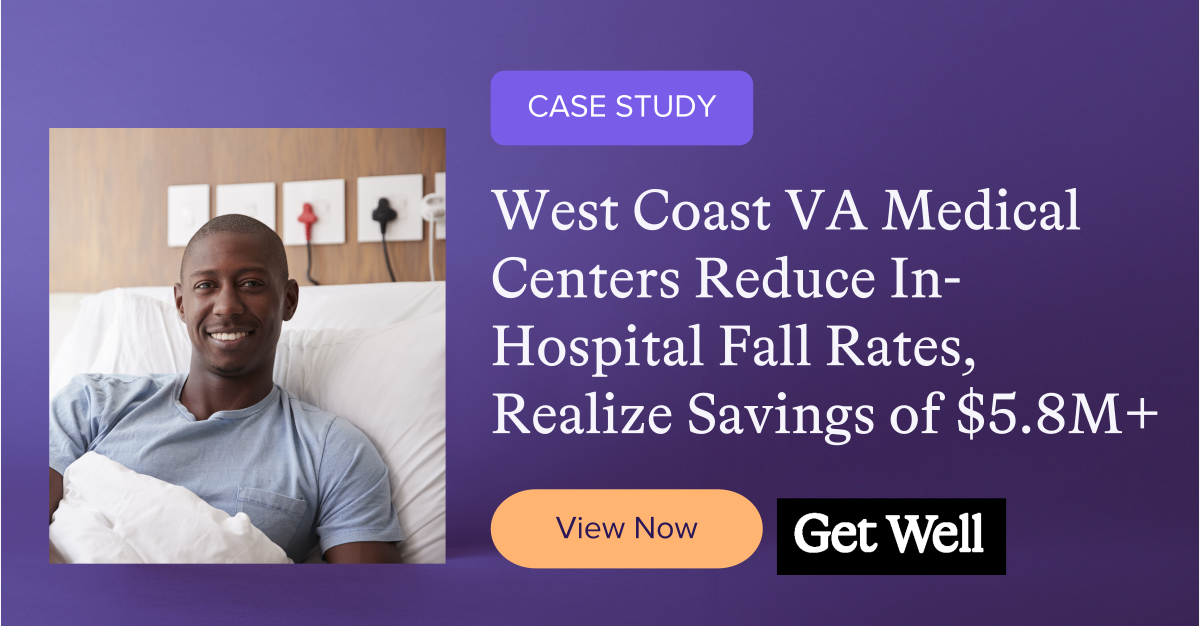
About the West Coast VA Medical Centers Get Well Solution: The Results $5.82M In cost savings realized across the four facilities over a 12-month period $1.4M With an attribution model = 25%, Get Well helped save these facilities over $1.4M in one year 33% Overall in-hospital fall rates declined by 33% in the group of
Discover how a Southeast Veteran Affairs Medical Center used Get Well to digitize health education resources, increasing Veteran patient awareness and promoting a healthier lifestyle for all.
Improving the Medicaid Beneficiary Experience: A Blueprint for Success
36% of Medicaid beneficiaries said they either “sometimes, rarely, or never” understand communications from their health plan. Understanding the barriers that this population faces is critical to improving Medicaid beneficiary experience. This white paper will cover: The perceptions that Medicaid beneficiaries have towards their healthcare providers and health plan. How barriers like Limited English Proficiency
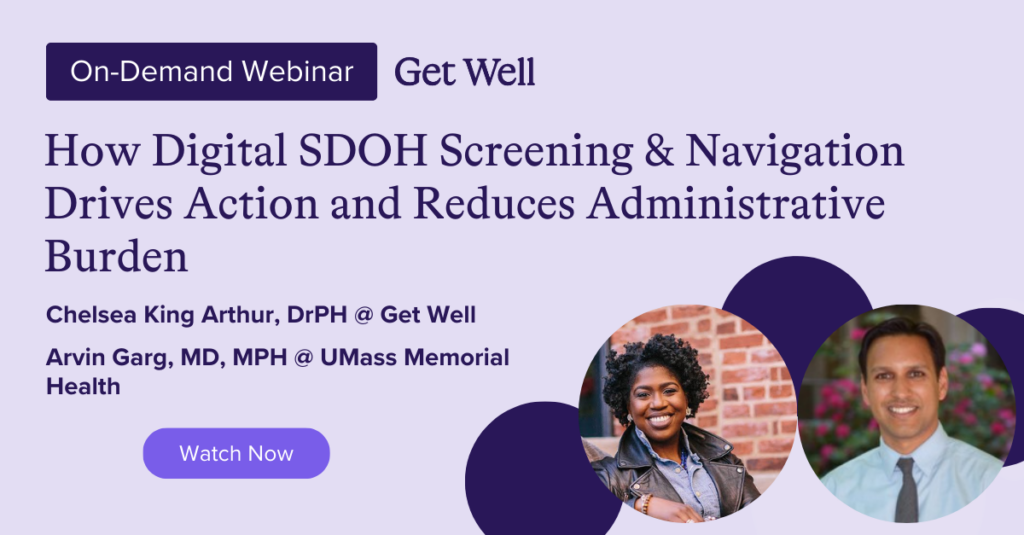
Social Determinants of Health (SDOH) screening and navigation is critical to providing whole person care in today’s healthcare landscape. But many health systems struggle to screen for social needs, accurately document patient needs, and close the loop on resource referrals. In this on-demand webinar, you’ll hear from our expert, Chelsea King Arthur, VP of Ambulatory

Medicare Advantage Headwinds: Why You Should Proactively Engage MA Plan Members
Christian Bagge, VP of Payer Strategy To say there is a lot going on within Medicare Advantage these days would be a massive understatement. In my role of payer strategy here at Get Well, I recently attended the 14th annual Medicare Star Ratings, HEDIS®, Quality Assurance and Risk Adjustment gathering a few weeks ago in
Digital Strategies for Educating Veteran Patients and Reducing Readmissions
Discover how a Northeast VA Medical Center used Get Well to engage and educate Veteran patients, while reducing hospital-wide readmission rates.
About this California health system Get Well 360 Modules used: The Results 3X Patient reach increase 29% Increase in patient text engagement 25% Increase in script order volume Goals The Solution

Get Well Named to AVIA Marketplace’s 2024 Top Smart Rooms Companies
Get Well, the global leader in digital patient engagement, announced today that it was recognized as a 2024 Top Company in Smart Rooms upon conclusion of extensive research and company outreach by AVIA Marketplace, the leading digital health marketplace. For nearly 25 years, Get Well has delivered digital, consumer-centric experiences to patients and their families
Discover how the infection control team at one VA Medical Center leveraged Get Well technology to improve hand hygiene practices at the facility and reduce HAIs.

Mobile care plan helps patients with kidney stone management
“[The care plan] incorporates patient-specific data to reinforce dietary management, fluid intake, and medication adherence based on the patient’s 24-hour urine collection results,” says Jenny Guo, MD. “We collaborated with a digital patient care management platform known as Get Well Loop. They’re used here at Northwestern throughout the hospital. We specifically partnered with them to
Discover how the infection control team at the Salem VA leveraged Get Well technology to improve hand hygiene practices at the facility and reduce HAI’s. You’ll also learn how four VISN 21 VA Medical Centers successfully reduced fall rates in their facilities while realizing cost-savings of over $5.5M in this 45-minute on-demand webinar.

Get Well’s Chelsea King Arthur Included in Becker’s Black Healthcare Leaders to Know List
Chelsea King Arthur, DrPH, and VP of Population and Digital Health at Get Well has been named to Becker’s Hospital Review 231+ Black healthcare leaders to know in 2024 Bethesda, Md. (May 24, 2024) – Get Well, the global leader in digital patient engagement, today announced their VP of Population and Digital Health, Chelsea King
Digital Library Provides Extended Access for Veteran Patients
How creating access to a digital library, in lieu of a physical library, improved Veteran patient experience. Dana Kear, Client Success Manager Reading books is a long-recognized method to improve mental health & wellbeing. Books can enrich our lives, but could they have health benefits as well? Researchers at Yale studied recorded submissions of 5,635
About this Midwest health system Get Well 360 Modules used: The Results $1.9M in realized patient revenue attributed to Get Well in 8 months 18% of people converted on the desired action 142% of targeted revenue achieved Goals The Solution Patient Stories
About UMass Memorial Health Get Well 360 Module used: Health Equity: Social Determinants of Health Program 30 Day Results 2X More than doubling their all-time record for number of patients screened in 30 days 5K+ resources shared with patients 2K+ patients screened in languages other than English 12% of patients received interventions from Get Well

Becker’s Hospital Review: 231+ Black healthcare leaders to know
Chelsea King Arthur, DrPH, VP of Ambulatory Products and Analytics, Get Well, has been named to the Becker’s Healthcare 231+ Black healthcare leaders to know list. Chelsea has devoted her career to ensuring that underserved patients and their families navigate a system tailored to their needs. Her efforts in Maternal Health Equity, Social Determinants of

Get Well renews and expands 14 partnerships in first 4 months of 2024, sees impressive results with SDOH Screening and Navigation solution through client use. Bethesda, Md. (May 16, 2024) – Get Well, the global leader in digital patient engagement, today announced they have continued and/or expanded 14 partnerships with leading health systems and hospitals
About Adventist Health Get Well Modules used: The Results $120M in realized patient revenue attributed to Get Well in 29 months (avg. aprox. $50M/ year) 1.5M Adventist Health patients served 431K personalized Get Well Navigator interactions 20.2M digital consumer touchpoints Goals The Solution

How a Southeast Veterans Affairs Medical Center revolutionized a national Age-Friendly Care movement to better care for people aged 65+. Dennis Shuman, Client Success Manager The IHI (Institute for Healthcare Improvement) has spearheaded the Age-Friendly Health Systems initiative – an action plan to address the growing challenge of reliably providing evidence-based practice to every older

Forbes: Walmart Ignored Health Care While Amazon And Get Well Worked To Addressed It
Walter Loeb of Forbes weighs in on how Amazon and Get Well excel in delivering personalized patient engagement, contrasting with Walmart’s struggle to make their healthcare programs work. Read the full story on Forbes.

A Get Well health system client used our SDOH Screening & Navigation solution and achieved these results in 1 week:

The Critical Role of Nursing Leadership in the Digital Healthcare Revolution
Jeanette Ives Erickson, RN, DNP, FAAN, Chief Nurse Emerita, Paul. M Erickson Chair in Nursing, Massachusetts General Hospital Katherine Virkstis, ND, Vice President, Clinical Advisory Services, Get Well In our series inspired by the recent article Leading with Hope by Katherine Virkstis, Get Well’s VP of Clinical Advisory Services, we delve deeper into each of

About Lifebridge Health Solutions/Modules used: Guided Care (Digital Care Management) The Results 43% reduction in Orthopedic readmissions rates 24% lower 30 day revisit rate for patients engaged post ED discharge 169% improvement in Google Star Ratings at LifeBridge NW ED Department 10 service lines supported with automated digital care 80% of patients “extremely likely” to

Download Social Determinants of Health (SDOH) RFP Template from Get Well
Are you a healthcare organization seeking to address Social Determinants of Health (SDOH) needs and scale your population health programs? We’ve compiled the fundamental questions you’ll want to include in your vendor RFP. These questions go beyond the traditional view of SDOH collection to better align with today’s landscape while streamlining clinical and ancillary workflows.

Black women face a staggering statistic – they are three times more likely to die from a pregnancy-related cause compared to White women. Under-resourced populations face significant maternal health inequities, leading to devastating consequences such as higher mortality rates and avoidable complications. Healthcare Provider Organizations are striving to address patients’ diverse needs to reduce complications


Hannah Figucia Griffith, BS, Get Well Client Success Manager Almost 16 million people in the US suffer from Chronic Obstructive Pulmonary Disease (COPD), also known as emphysema or chronic bronchitis, with symptoms that include frequent coughing or wheezing, excess mucus production and shortness of breath1. There is an increased prevalence of COPD in older adults

Black women are three times more likely to die from birthing complications than their white counterparts, and this number is still increasing. Here are some facts.


In the era of technology, why doesn’t healthcare make any sense?
Ryan Grimmett, Chief of Staff, Product Consumer technology has come a long way from the days of trekking to your local video rental store. Now, with smart TVs, you can effortlessly browse and stream the endless supply of films without concerns about availability or the hassle of physical in-store returns. This expectation of convenience has

Leading with Hope: 7 Insights from Get Well’s CNO Council on the Future of Digital Health
Katherine Virkstis, ND, Vice President, Clinical Advisory Services In an era where digital transformation is reshaping healthcare, the role of the Chief Nursing Officer (CNO) has never been more important. CNOs are strategic and visionary leaders, adept at blending clinical expertise and a deep understanding of care team workflows with technology innovations–to uphold patient-centered care

Get Well hosts Chief Nursing Officer Council on the Future of Digital Health
23 Nurse Executives representing more than 20 of the largest healthcare organizations gathered to discuss enhancing patient care through technology BETHESDA, MD (April 2, 2024) – Get Well, the global leader in digital patient engagement, hosted the Chief Nursing Officer (CNO) Council on March 6th, where 23 nurse executives from diverse healthcare backgrounds convened to



HealthLeaders Media: Is Healthcare Innovating Its Way Back To Patient Engagement?
Eric Wicklund of HealthLeaders Media shared his thoughts on yesterday’s HIMSS panel with Michael O’Neil, Tressa Springmann, Michael Garcia, and Eric Alper. Read the full story on HealthLeaders Media.
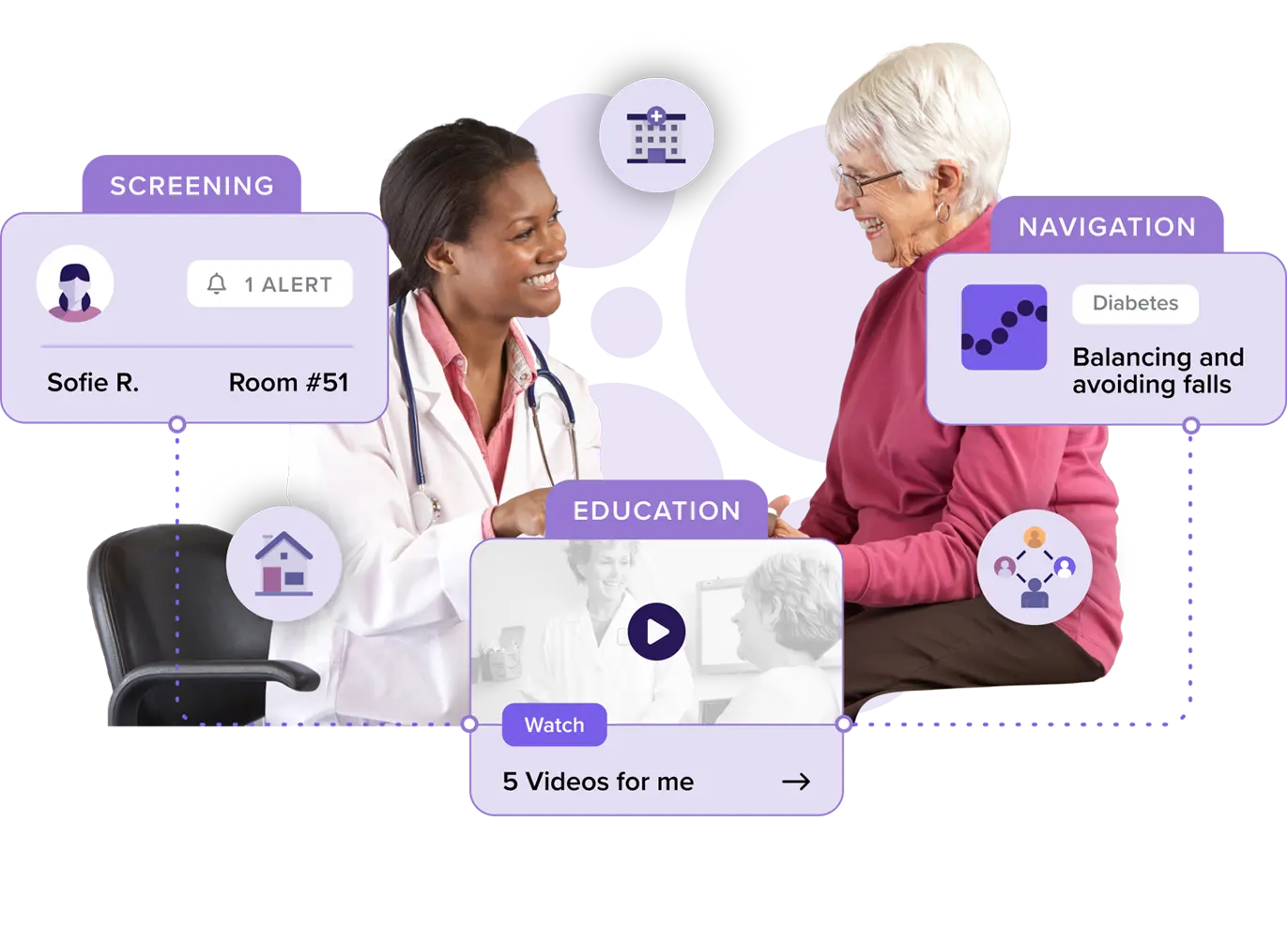
Get Well 360 empowers healthcare organizations to deliver the digital experience that consumers expect across every step of the healthcare journey - in the community, at the point of care, and beyond.